
There was a time when concrete flooring belonged exclusively to warehouses, garages, and unfinished basements. Those days are long gone. Today, concrete has emerged as one of the most sought-after materials in residential interior design, turning up in luxury lofts, family kitchens, and sprawling open-plan living spaces alike.
What changed? Advances in finishing techniques, a wider palette of colors and textures, and a growing appreciation for minimalist aesthetics have all played a role. Homeowners and designers now recognize that a well-finished concrete floor can be just as warm and inviting as hardwood or tile while offering durability and versatility that few other materials can match.
In this guide, we’ll walk you through a range of concrete flooring ideas suited to modern home interiors. From popular finishes and creative color options to maintenance tips, contractor selection, and budgeting advice, you’ll have everything you need to decide whether concrete is the right foundation for your next renovation.
1. Discover Modern Concrete Flooring Ideas
Concrete’s reputation has undergone a dramatic transformation over the past decade. Once dismissed as cold and utilitarian, it is now championed by architects and interior designers for its clean lines and understated elegance. High-end residential projects around the world feature polished or stained concrete as a deliberate design statement rather than a cost-cutting compromise.
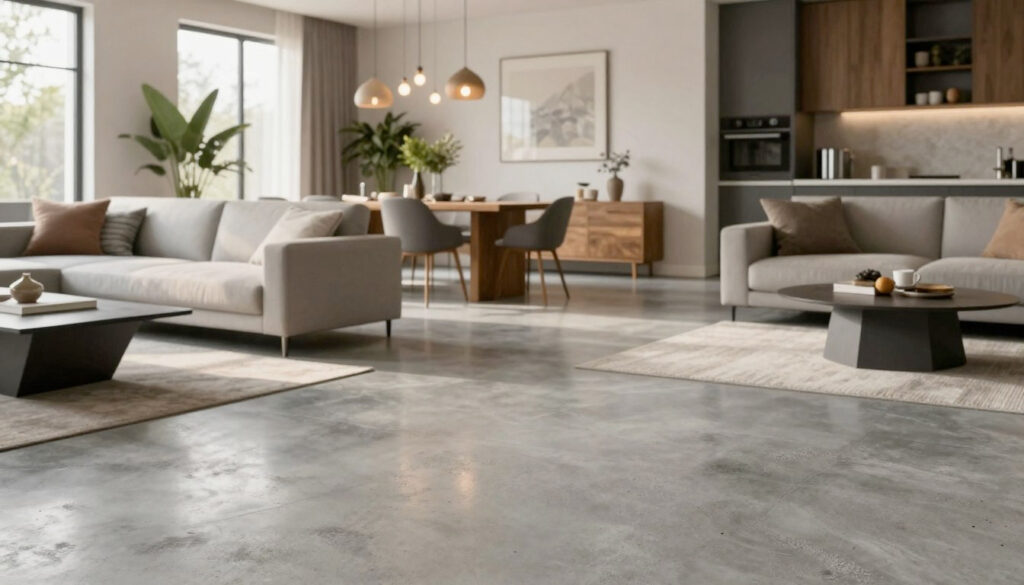
One reason for this shift is versatility. Concrete works beautifully in almost every room of the house. In kitchens, it stands up to spills and heavy foot traffic without complaint. In living rooms, it provides a neutral backdrop that lets furniture, textiles, and artwork take center stage. Entryways benefit from its toughness, and bathrooms can take advantage of its moisture resistance when properly sealed.
Concrete also pairs exceptionally well with other materials. Warm wood furniture, plush area rugs, soft linen curtains, and statement pendant lights all create a pleasing contrast against a concrete floor. This balance of raw and refined is central to several trending design styles like minimalism, industrial chic, Scandinavian simplicity, and the Japanese-inspired wabi-sabi aesthetic, which celebrates imperfection and natural beauty.
Whether you’re building a new home or refreshing an existing one, exploring modern concrete flooring ideas opens up possibilities you might not have considered. The sections that follow will help you narrow your options and find the perfect look for your space.
2. Benefits of Concrete Floors in Home Design
Before diving into specific finishes and colors, it’s worth understanding why concrete deserves a spot on your shortlist. The practical advantages go well beyond aesthetics.
Exceptional durability. Concrete is one of the hardest flooring surfaces available. It resists scratches, dents, and wear from daily foot traffic, making it an excellent choice for busy households and homes with pets. A properly installed and sealed concrete floor can last for decades with minimal upkeep.
A healthier indoor environment. Unlike carpet, which traps dust mites, pollen, and pet dander, concrete offers a smooth, non-porous surface that is easy to keep clean. For allergy sufferers, this can make a meaningful difference in day-to-day comfort.
Energy efficiency and thermal mass. Concrete absorbs heat during the day and releases it slowly overnight, helping to regulate indoor temperatures naturally. This thermal mass quality pairs perfectly with radiant underfloor heating systems, providing consistent warmth underfoot while reducing energy consumption.
Sustainability. Concrete can incorporate recycled aggregates, reducing the demand for virgin materials. Its extraordinary lifespan means fewer replacement cycles compared with flooring options that may need to be swapped out every ten to fifteen years. And because concrete is already the subfloor in many homes, choosing to finish it rather than cover it with another material eliminates waste entirely.
Design flexibility. Think of concrete as a blank canvas. It can be polished to a mirror-like shine, stained in rich earth tones, stamped to mimic stone or wood, or coated in eye-catching epoxy. The number of concrete flooring ideas available today is virtually limitless.
3. Popular Finishes for Stylish Concrete Floors
The finish you choose will define the character of your floor. Here are the most popular options and the look each one achieves.
Polished concrete. This is the finish most people picture when they think of modern concrete floors. The surface is mechanically ground and buffed through progressively finer grits until it reaches a high-gloss, almost mirror-like sheen. Polished concrete reflects light beautifully, making rooms feel larger and brighter. It’s an ideal match for contemporary and minimalist interiors.
Stained concrete. Acid-based stains react chemically with the minerals in the concrete to produce rich, mottled color effects that are entirely unique to each slab. The result has an organic, almost marbled quality. Water-based stains offer more color consistency and a broader palette but still deliver a natural warmth. Both types work well in living areas and bedrooms where you want character without overwhelming pattern.
Stamped concrete. If you love the look of natural stone, brick, slate, or even wood planks but not the associated price tag, stamped concrete is worth exploring. A pattern is pressed into freshly poured concrete to create a textured surface that closely mimics other materials. It’s a popular choice for entryways, patios, and transitional spaces.
Epoxy-coated concrete. An epoxy coating creates a seamless, high-performance surface that resists moisture, chemicals, and heavy impact. Available in solid colors, metallic swirl effects, or decorative flake patterns, epoxy floors are especially well suited to kitchens, laundry rooms, and basements where durability and water resistance are top priorities.
Microtopping and overlays. A thin, cement-based layer applied over an existing floor, microtoppings are the go-to solution for renovations where tearing out the current flooring is impractical or too costly. They can be troweled to a smooth finish or lightly textured and then stained or sealed to achieve a wide range of looks.
Exposed aggregate. In this technique, the top layer of cement paste is removed to reveal the stones, pebbles, and sand within the concrete mix. The result is a textured, natural appearance that works particularly well in casual living spaces and rooms that connect to outdoor areas.
4. How to Maintain Concrete Floors Easily
One of the biggest draws of concrete flooring is how little maintenance it requires compared with many alternatives. That said, a few simple habits will keep your floors looking their best for years.
Seal your floors properly. A quality sealer is the single most important step in protecting a concrete floor. Penetrating sealers soak into the concrete and guard against moisture from below, while topical sealers create a protective film on the surface. Your contractor should apply the first coat immediately after finishing, and you should plan to reseal every two to five years depending on traffic levels and the type of finish.
Establish a daily cleaning routine. Dust mopping or vacuuming regularly prevents grit and debris from scratching the surface. Once a week, damp mop with a pH-neutral cleaner formulated for sealed concrete. Avoid harsh chemicals like ammonia or bleach, which can degrade the sealer over time.
Address spills and stains promptly. Blot spills as soon as they happen to prevent them from penetrating the sealer. For stubborn stains, a paste made from baking soda and water applied to the area and left for a few hours usually does the trick. Specialized concrete stain removers are also available for tougher jobs.
Handle scratches and chips with care. Minor surface scratches on polished concrete can often be buffed out with a fine abrasive pad. Small chips can be filled with a color-matched concrete patching compound and then resealed. For anything more significant, consult a professional.
Finally, use felt pads under furniture legs and avoid dragging heavy objects across the floor. These small precautions go a long way toward preserving the finish.
5. Choosing the Right Contractor for Concrete Floors
The quality of a concrete floor depends heavily on the skill of the person installing and finishing it. Taking the time to find the right contractor will save you money, headaches, and disappointment down the road.
Look for specialization. Not all concrete contractors are equal. You want someone who specializes in decorative or residential concrete finishing, not just sidewalk and foundation work. Decorative concrete requires a different skill set, and experience matters.
Review their portfolio. Ask to see completed projects that are similar to the finish and style you have in mind. Before-and-after photos are especially helpful. If a contractor can’t or won’t share examples of past work, consider that a red flag.
Check references and reviews. Speak with past clients whenever possible and look for reviews on platforms like Google, Houzz, and local contractor directories. Consistent positive feedback about communication, timeliness, and quality is a strong indicator.
When you meet with potential contractors, come prepared with questions. Ask what surface preparation is included in the quote, which sealer they recommend and why, what the expected timeline is from start to finish, and whether they offer a warranty on their work.
Be cautious of bids that come in dramatically lower than others. An unusually cheap quote may signal shortcuts in preparation or materials. Aim to collect at least three detailed written estimates so you can compare scope, products, and pricing side by side.
Conclusion
Concrete flooring has come a long way from its industrial roots. With the range of finishes, colors, and techniques available today, it’s a material that can feel as warm and polished as any traditional flooring option all the while offering durability and design flexibility.
Start by choosing a finish and color palette that aligns with your home’s overall aesthetic. Research local contractors who specialize in decorative concrete, and don’t hesitate to ask questions and compare quotes. With thoughtful planning and the right team, a concrete floor can transform the look and feel of your home for decades to come.
Whether you’re drawn to the sleek elegance of polished concrete, the earthy character of acid-stained surfaces, or the creative freedom of custom dyes and patterns, there’s a concrete flooring idea out there that’s perfect for your space. Now is the time to explore it.